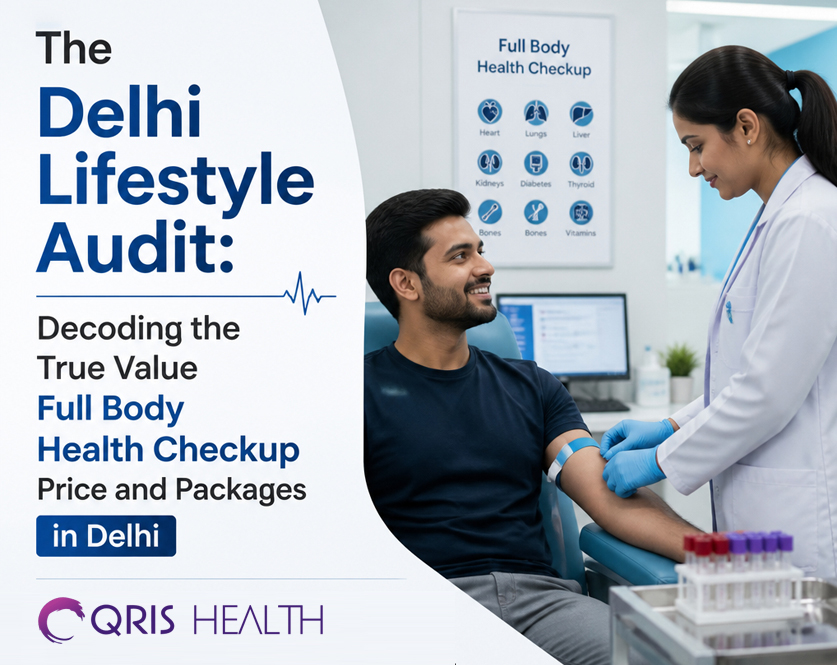
Most people searching for a full body health checkup in Delhi are usually trying to answer one simple question first — “How much will it cost me?”
Fair enough.
Full body checkup price in Delhi NCR can range from ₹999 to ₹15,000 depending on the packages, the lab, and honestly, how aggressively it’s being marketed that week.
But after years of seeing health reports get ignored, misunderstood, or overused, the bigger issue usually isn’t the price alone.
It’s whether the tests being done actually match the person sitting in front of you.
A young IT professional with poor sleep and borderline fatty liver probably doesn’t need the same screening approach as a 52-year-old diabetic smoker who hasn’t checked kidney function in three years.
Still, people compare packages line by line as if every test carries equal value.
It doesn’t.
And this is where many health checkups in Delhi become more of a shopping exercise than a medical one.
What Is Usually Included in a Full Body Checkup?
Packages for most standard full body checkup In Delhi include basic blood and urine investigations such as:
- CBC.
- Blood sugar.
- Liver function.
- Kidney profile.
- Lipid profile.
- Thyroid testing.
- Urine routine examination.
- Sometimes Vitamin D or Vitamin B12.
Some packages also include ECG , chest X-ray, ultrasound, or cardiac risk markers.
Although I wouldn’t rely on package names alone. “Advanced,” “Executive” or “Premium” can mean very different things depending on the lab.
A patient in his early 40s recently came for fatigue and frequent headaches.
He already had a “complete” health package done elsewhere.
Everything looked normal at first glance.
Except CRP was mildly elevated. Sleep pattern was poor. Weight had crept up slowly over two years.
Sedentary desk work, late dinners, barely any movement during the day — the report itself wasn’t alarming.
The pattern was.
That distinction matters more than people think.
Full Body Checkup Price in Delhi
Most basic full body checkup price in Delhi packages start around ₹999–₹2,500.
Mid range comprehensive panels generally fall between ₹3,000–₹6,000, especially when cardiac markers, diabetes screening, thyroid testing, vitamins, and imaging are included.
Beyond that pricing often depends on:
- Home sample collection.
- NABL accreditation.
- Number of biomarkers.
- Doctor consultation inclusion.
- Imaging studies.
- Brand positioning of the diagnostic center.
But very large popular tests and packages can sometimes create another problem — too many borderline findings with no clinical relevance.
That said, under-testing isn’t ideal either.
There’s no perfect package size.
Depends on age, symptoms, family history, lifestyle, medications… even pollution exposure in Delhi NCR probably plays a bigger role now than we acknowledged a few years ago.
Health Checkup in Delhi: What People Usually Ignore
One thing that repeatedly shows up in practice is delayed testing.
People wait until symptoms become disruptive.
- Persistent acidity.
- Unexplained tiredness.
- Recovery takes longer after viral infections.
- Weight changes that quietly continue for months.
Then suddenly they want a “full body test.”
The body rarely works that dramatically.
Most abnormalities build gradually.
A woman from Noida came for routine preventive testing because her employer required it.
Sugar was normal.
Cholesterol wasn’t alarming.
Liver enzymes were slightly raised — barely outside range.
Easy to dismiss.
But when we revisited old reports, the same pattern had been repeating for three years.
Not severe.
Just consistently abnormal.
Sometimes that matters more than one sharply abnormal number.
Full Body Checkup Near Me: How to Choose Properly
Searching “ full body checkup near me” usually gives dozens of options within seconds now.
- Discounts everywhere.
- Flash offers.
- Add-on tests.
Some are reasonable.
Some are mostly marketing.
A few things are worth checking before booking:
- Is the lab accredited?
- Are reports reviewed properly?
- Do they offer doctor interpretation if needed?
- Is home collection handled reliably?
- Are unnecessary tumor markers being added casually?
This last one is common lately.
Tumor markers sound reassuring in advertisements, but many are not recommended for routine screening in healthy individuals without context.
People panic over mildly abnormal values that often mean very little.
This is where people get it wrong.
More testing does not automatically mean better preventive care.
Who Should Consider a Full Body Checkup?
Usually:
- Adults above 30 with sedentary lifestyles.
- Diabetes risk.
- Hypertension.
- Obesity.
- Smoking history.
- Thyroid concerns.
- Family history of heart disease.
- Persistent unexplained symptoms.
But honestly, even younger adults in Delhi NCR are showing metabolic issues earlier now.
Long sitting hours, processed food intake, irregular sleep cycles, stress hormones staying elevated for years — it reflects in reports eventually.
Not always dramatically at first.
Sometimes it’s just borderline triglycerides that keep climbing quietly.
Or liver enzymes that fluctuate but never fully settle.
Or Vitamin D levels nobody follows up on seriously.
And no, vitamins alone don’t fix the larger pattern.
So What’s the Right Approach?
A good health checkup should answer practical questions:
- Is there early diabetes risk?
- Is inflammation recurring?
- Are liver and kidneys coping well?
- Is cholesterol worsening over time?
- Are lifestyle patterns already affecting recovery and energy?
The report should help guide decisions, not just generate anxiety.
Because a health package is only useful if someone interprets it in context.
Otherwise, it becomes another PDF sitting unread in WhatsApp downloads.
And that happens more often than people admit.
Final Thought
A full body checkup in Delhi shouldn’t be chosen only because it’s the cheapest or the most heavily advertised.
Preventive testing works best when it’s relevant, timed properly and interpreted realistically.
Sometimes reports are completely normal and reassurance is enough.
Sometimes one mildly abnormal trend deserves attention long before disease develops.
The difficult part is knowing the difference.
 Health Risks of Inactive Lifestyle.jpg)
 Health effects of smoking.jpg)